by Rupe | Oct 15, 2013 | Money Matters
Many people share the common misconception that estate planning is something only very affluent individuals should do before they die. However, estate planning is important, even for those individuals of modest means. Planning for the disposition of one’s assets upon death can offer significant benefits to all parties involved.
The greatest benefit may lie in knowing that your wishes will be respected. Naming your heirs—and relieving them of unnecessary costs and stress by carefully designating which assets they will receive—is preferable to having a court make such decisions for you.
The estate planning process not only includes designating your heirs, but it may also include establishing vehicles—such as trusts—to help protect your assets. This will help ensure your assets go to the people you care about, and can help minimize taxes. In the event of mental or physical incapacity, an estate plan can designate people to help care for you and your property through a durable power of attorney and a health care proxy. You may also want to include a living will among your estate planning documents, so your health care providers know your wishes regarding the possible use of life-sustaining measures in dire situations.
Source: MassMutual Group
by Rupe | Oct 15, 2013 | Money Matters
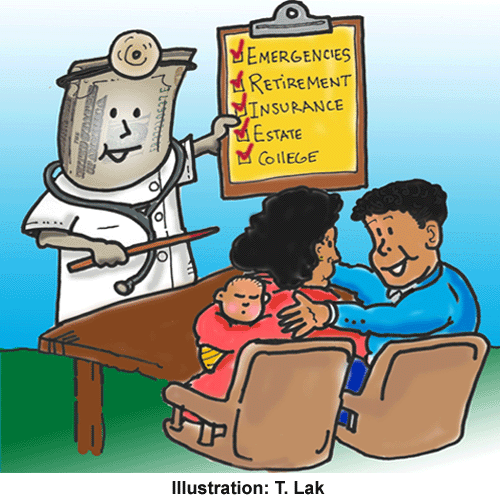
Pediatrician’s phone number is programmed into your iPhone, check. Home finally childproofed, check. Hand sanitizers strategically placed everywhere you may need them, check. You’re doing everything by the book for your child, and now it’s time to complete the final step in that equation: getting your finances in order to prepare for your family’s future and dreams. Here are five things every new parent should do:
1. Build up an emergency fund
An emergency fund is a stash of money set-aside to pay for unexpected life events, from new brakes for the car to a surprise medical bill to a new roof. Without it, you might have to pay for those expenses in financially harmful ways like by raiding your retirement fund or going into debt, says Danny Kofke, author of “A Simple Book of Financial Wisdom: Teach Yourself (and Your Kids) How to Live Wealthy with Little Money.” Save at least six months of income in your emergency fund, Kofke says, and put this money in a safe and accessible place, such as a money market or savings account.
Source: MassMutual Group
by Rupe | Nov 23, 2012 | Money Matters
Introduction
What really goes on in the back rooms of car dealerships across America?
What does the car salesman do when he leaves you sitting in a sales office and goes to talk with his boss?
What are the tricks salespeople use to increase their profit and how can consumers protect themselves from overpaying?
These were the questions we, the editors at Edmunds.com, wanted to answer for our readers. But how could they really know that our information was accurate and up-to-date? Finally, we came up with the idea of hiring an investigative reporter to work in the industry and experience, firsthand, the life of a car salesman.
We hired Chandler Phillips, a veteran journalist, to go undercover by working at two new car dealerships in the Los Angeles area. First, he would work at a high-volume, high-pressure dealership selling Japanese cars. Then, he’d change over to a smaller car lot that sold domestic cars at “no haggle” prices.
Source: Edmunds.com | Read follow up here
My comments:
This is definitely a must read for anyone getting ready to go buy a car. It was really a great heads up from a good friend of mine. I am getting ready to buy my second real car in 22 years and this was really insightful.
by Rupe | Dec 6, 2011 | Money Matters

by Rupe | Sep 29, 2011 | Money Matters, what the...?
 As companies have been moving away from traditional pension plans, they have been shifting employees to new retirement plans, such as 401(k)s, that transfer the cost — and the risk — to workers.
Companies have claimed for years that old-style pensions were unsustainable. Author Ellen Schultz tells Morning Edition host Steve Inskeep that there’s another explanation.
“The main narrative is that [companies] are struggling to pay both their pensions and these unexpectedly high health care costs for the retirees,” Schultz says. “What isn’t known is that companies were well-prepared for this phenomenon. The plans were in fact significantly overfunded. They had more than enough to pay every dime for every person currently employed and already retired.”
Click source to continue…
Source: NPR
My Comments:
Yet another way of fleecing hard working Americans. Â I am not one for conspiracy theories, but when CEO’s are running off with multi-millon dollar compensations and hundreds of millions in retirement, how can one stomach not paying the pittance to someone who has been robbed of his/her life’s energies over decades…it is quite wicked…quite wicked indeed.
I have not bought the book yet, but it is on my list to read. Â Â Â

by Rupe | Sep 19, 2011 | Mad Musings, Military-Political, Money Matters
 As Washington looks to squeeze savings from once-sacrosanct entitlements like Social Security and Medicare, another big social welfare system is growing as rapidly, but with far less scrutiny: the health and pension benefits of military retirees.
Military pensions and health care for active and retired troops now cost the government about $100 billion a year, representing an expanding portion of both the Pentagon budget — about $700 billion a year, including war costs — and the national debt, which together finance the programs.
Click source link to read full article –
Source: New York Times
My Comments:
Aiight now…just don’t touch my check…thank you very much Stevie G.